In manufacturing, a single failure can incur costs exceeding those of an entire design cycle.
- An overheated battery pack.
- Unexpected vibration.
- Premature fatigue failure.
Now consider this:
What if these issues could be detected — and resolved — prior to the construction of the first prototype?
This is precisely where Simcenter revolutionizes product development.
The Importance of Ensuring Reliability from the Design Phase
Historically, numerous manufacturers adhere to the following sequence:
Design → Prototype → Test → Fail → Redesign → Repeat
This methodology results in:
- Extended development timelines
- Increased costs for prototypes
- Delayed product launches
- Dissatisfaction among customers
- Claims under warranty
In the current competitive landscape of automotive and industrial sectors, this reactive methodology is no longer viable.
Reliability must be designed in — rather than inspected at a later stage.
What is Simcenter?
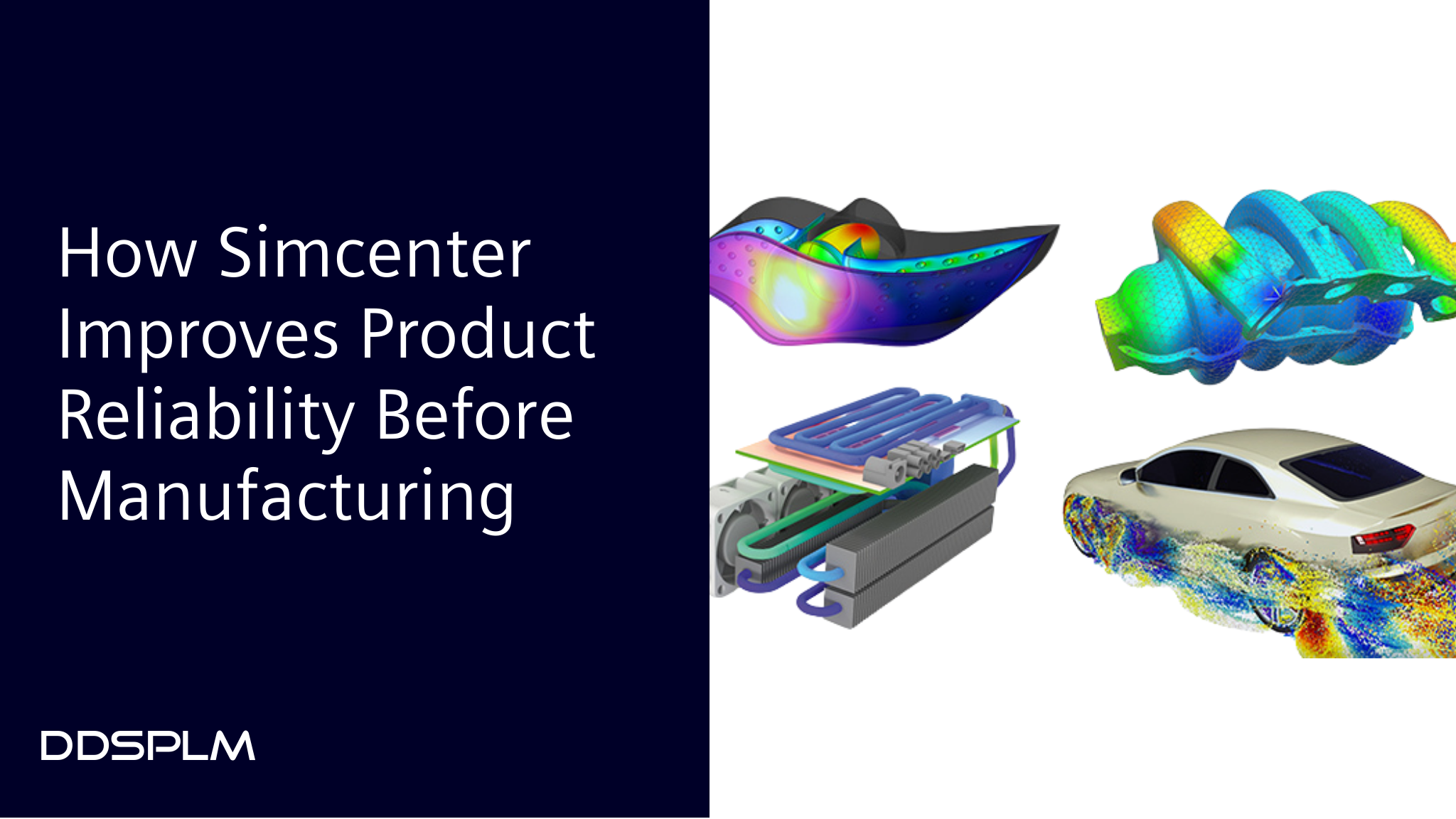
Created by Siemens Digital Industries Software, Simcenter represents a sophisticated simulation portfolio that consolidates structural, thermal, CFD, motion, and system simulations into a cohesive environment.
It empowers engineers to digitally forecast real-world performance prior to the commencement of manufacturing.
In simple terms:
Simcenter enables virtual testing before making physical investments.
How Simcenter Enhances Product Reliability
Let us analyze it further.
1- Structural Strength & Fatigue Prediction
Will the component show failure under exerted load?
Will it endure for 5 years in cyclic stress?
Simcenter conducts advanced finite element analysis (FEA) to:
- Anticipate stress concentration areas
- Examine fatigue lifespan
- Confirm load-bearing capability
- Enhance durability
This mitigates unforeseen failures in automotive brackets, housings, shafts, and welded assemblies.
2 – Thermal Performance Validation
Overheating poses one of the most significant reliability challenges — particularly in EVs, electronics, and industrial machinery.
Simcenter assists engineers:
- Evaluate heat dissipation
- Study airflow patterns
- Optimize cooling systems
- Prevent thermal runaway
Rather than uncovering overheating during testing, you address it during the design phase.
3 – Vibration & NVH Analysis
Uncontrolled vibrations result in noise, discomfort, and long-term damage.
Simcenter detects:
- Natural frequencies
- Resonance hazards
- Noise origins
- Dynamic response challenges
This guarantees smoother, quieter, and more durable products.
4 – Multi-Physics Simulation
Real-world conditions are intricate.
Products undergo combined:
- Thermal stress
- Structural load
- Fluid interaction
- Motion dynamics
Simcenter integrates these influences into a single interconnected simulation environment – providing a more authentic and dependable validation process.
Real Business Impact for Manufacturing SMEs
When reliability is incorporated into design, manufacturers can achieve:
- A reduction in development cycles by 25–40%
- A decrease of up to 30% in the number of physical prototypes
- Lower costs associated with warranties and field failures
- An expedited time-to-market
- Enhanced customer confidence
Most importantly:
You transition from reactive problem-solving to proactive engineering excellence.
Interactive Check: Is Your Product Truly Reliable?
Consider the following questions:
Are failures identified during customer usage?
Are prototypes going over budget?
Are design modifications frequent and occurring late in the process?
Is the performance under thermal or vibration conditions uncertain?
If the answer to any of these questions is “yes,” then simulation-driven reliability can provide a significant impact.
From Design Validation to Digital Twin
Simcenter also facilitates a more comprehensive Digital Twin strategy — linking design intent with actual performance data..
When combined with CAD and PLM systems, it establishes a smooth workflow:
Design → Simulation → Manufacturing → Lifecycle Feedback
This interconnected engineering methodology guarantees that reliability extends beyond the design phase — it persists throughout the entire product lifecycle.
The Bottom Line
Reliability is no longer considered a luxury.
It has become a competitive necessity.
Companies that engage in early simulation:
- Accelerate innovation
- Reduce risks
- Launch with confidence
- Protect their brand reputation
The issue is not whether simulation enhances reliability.
The critical question is:
Can you afford to create products without first validating them digitally?
Contact us to book a consultation with our technical team on marketing@ddsplm.com