
DDSPLM PRIVATE LIMITED
QForm UK is a sophisticated engineering software designed for the simulation, analysis, and optimization of metal forming processes, ensuring exceptional reliability.
It addresses the fundamental requirements for metal forming simulation across both large and small manufacturing firms, as well as research and educational institutions.
QForm UK is specifically developed for the simulation and optimization of various metal forming techniques, including cold, warm, and hot die forging, open die forging, rolling, profile extrusion, and more. The program can also incorporate a range of additional specialized modules, such as microstructure prediction, heat treatment simulation, and user subroutine assignments.
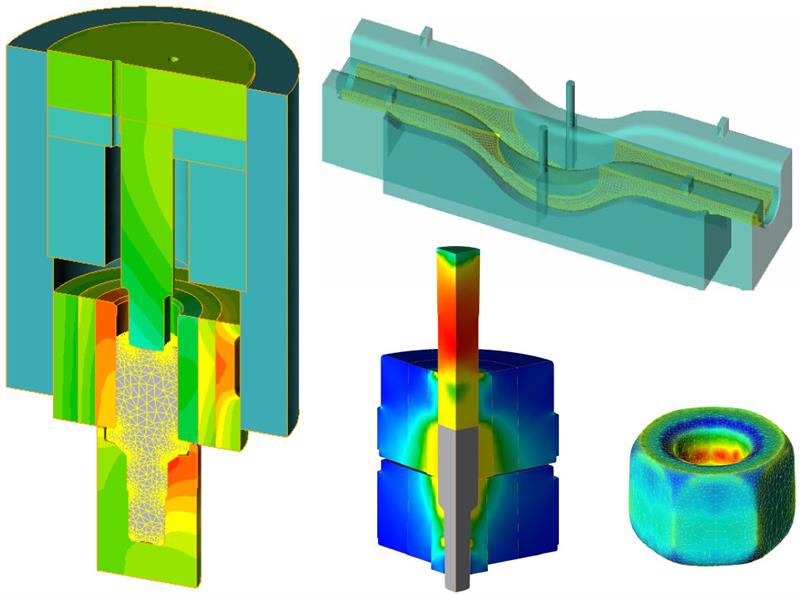
This software boasts the most user-friendly interface available, along with the quickest simulation times, thanks to cutting-edge programming techniques and extensive functionality. Its robust and versatile software core enables the simulation of any type of metal forming process. We have leveraged our 30 years of expertise in metal forming simulation to create the only software on the market featuring a fully automated and highly adaptive mesh generator.
The interface is designed for maximum convenience, allowing users to effortlessly tackle pre/post-processing tasks all within a single platform.
QForm UK is capable of simulating a wide range of metal forming processes, and the array of processes that can be modeled in QForm UK is constantly being enhanced due to the following features:
QForm UK Extrusion stands out as the sole program available that can execute simulations of material flow, which are thermally and mechanically linked to die deformation, even for highly intricate thin-walled profiles.
Developed specifically for analyzing material flow during the extrusion process and assessing the stress-strain state of the die set, QForm UK Extrusion boasts a parametric representation of bearing geometry along with cutting-edge automatic meshing algorithms. By maintaining the bearing geometry as a parametric surface, the program can accommodate scenarios where die deformation leads to localized areas of very slight inclination in the choke or relief. Simulation outcomes, alongside actual production data from clients and laboratory experiments, demonstrate that even minor variations in bearing angle can considerably affect material flow patterns. This software is designed for use by production engineers and die designers, eliminating the need for any prior knowledge of the finite element method to conduct precise simulations.
QForm Ring Rolling is a simulation tool designed specifically for wheel and ring rolling processes. This software is tailored to utilize data from contemporary rolling mill algorithms, which greatly streamline the input of the initial data necessary for simulation. Unique calculation techniques enable rapid and precise forecasting of ring deformation, whether it has a rectangular or shaped cross-section.
Simulating rolling processes presents challenges due to the small size of the deformation zone, which is constantly shifted by the rotation of the workpiece. Despite this, the substantial volume of material that remains undeformed must still accurately maintain its shape, temperature, and other fields. Conventional simulation methods would necessitate a very fine mesh throughout the entire volume of the workpiece to ensure accuracy, leading to significantly prolonged simulation times.
Modern rolling machinery features complex kinematics that cannot be effectively captured by generic models. QForm Ring Rolling employs specialized computational algorithms to address these challenges.
The complete technological chain in QForm for simulating ring rolling encompasses all steps that can be modeled. The process can start with a 2D simulation of upsetting, progress through subsequent operations such as forging and piercing, and culminate in the ring rolling simulation.