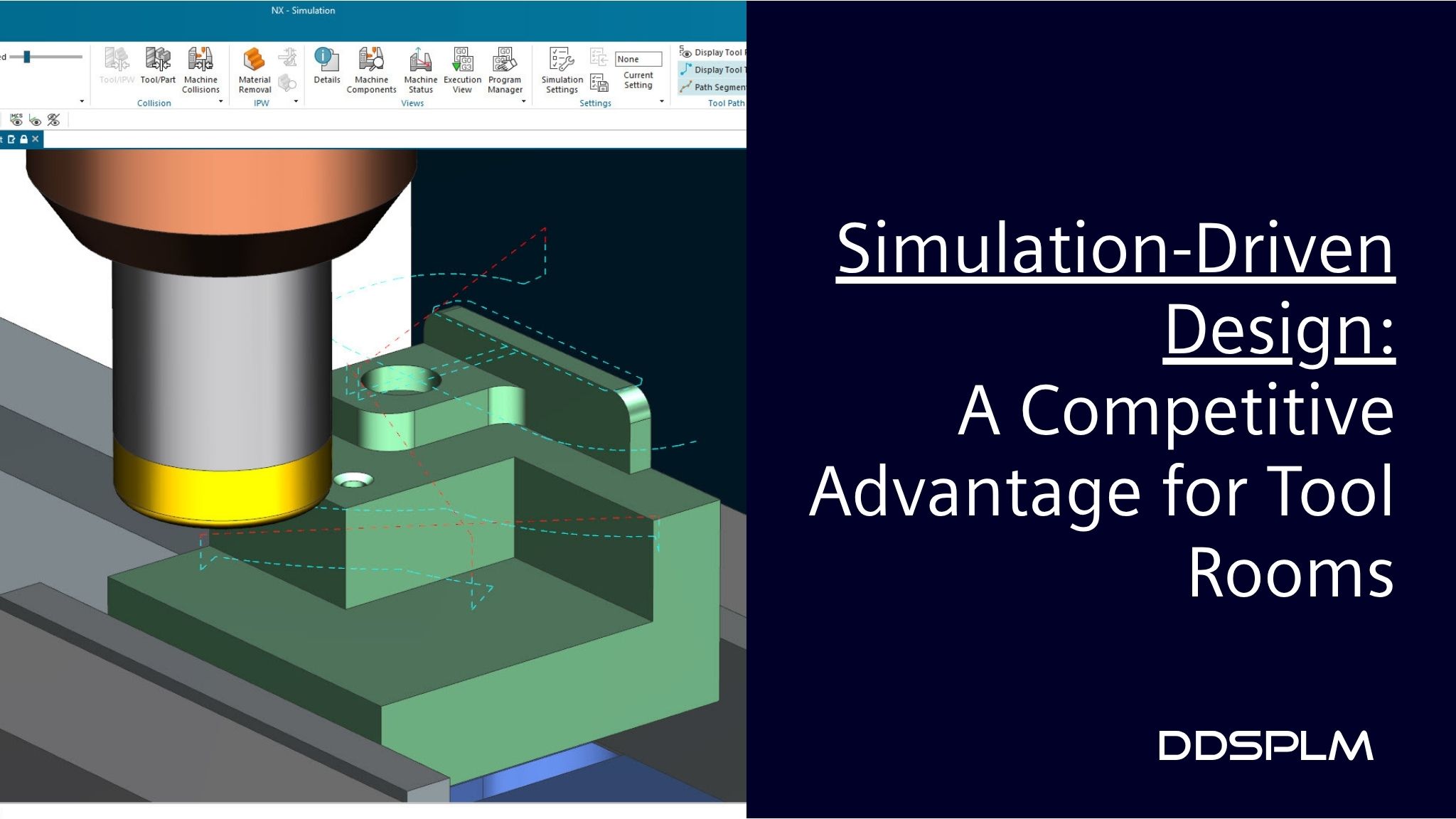
Speed, precision and cost-efficiency are no longer a choice in the rapidly changing automotive industry but are essential. The tool rooms, which are crucial in the development of molds, dies and tooling, are under stress to provide quality tools in a shorter period of time.
Conventional design and trial methods are not adequate anymore.
This is where simulation-based design is revolutionizing the way in which automotive tool rooms are run - making smarter decisions, less rework, and quicker time-to-market.
The problem with Traditional Tooling Solutions.
Still in use in many automotive tool rooms:
- Multiple physical trials List item
- Manual design iterations
- Late-stage defect detection
Poor transparency of performance in manufacturing.
Such hardships tend to cause:
- More time in developing tools.
- Higher production costs
- Quality inconsistencies
- Delayed product launches
These inefficiencies can have a direct effect on competitiveness in an industry where time is of the essence.
Simulation driven design involves the enhancement of engineering simulation to the product and tooling design stage.
Rather than physically testing designs, engineers can:
- Virtually checks the performance of moulds and dies.
- Anticipate faults like warpage, shrinkage, or cracks.
- Improve tool geometry and process factors.
In this way, tool rooms can detect and fix problems prior to production.
Why is it important to Automotive Tool Rooms?
1. Reduced Tool Development Times.
Simulation does not require the process of trial and error.
- Reduce design iterations
- Achieve first-time-right tooling
- Accelerate product launches
2. Better the Quality of tools and accuracy
When it comes to simulation, the performance of tools is tested prior to manufacturing.
- Better dimensional accuracy
- Less flaws on molded or stamped components.
- Batches of the same quality
3. Cost Reduction
Any physical test is time-consuming, material-consuming, and labour-consuming.
Simulation helps:
- Minimize scrap and rework
- Optimize material usage
- Reduce tooling modifications
4. Enhanced Collaboration
The workflows are simulation-driven and related to design, analysis, and manufacturing teams.
- Improved communication
- Real-time data sharing
- Better decision-making
5. Automotive manufacturing competitive advantage.
The suppliers required by OEMs and Tier 1 suppliers include:
- Faster delivery
- Higher precision
- Lower costs
The tool rooms embracing simulation have a clear edge since they fulfil the expectations effectively.
Automotive tool room Applications: -
Injection Molding Simulation
- Flow patterns, cooling, and warping prediction.
- Optimize the location of gates and cycle time.
️Stamping & Forming Simulation
- Analyze material behavior
- Avoid cracks, wrinkles, and springback.
Die Design Optimization
- Improve tool life
- Enhance part quality
Process Optimization
- Validate manufacturing parameters
- Improve overall efficiency
The role of advanced simulation platforms is important.
Current-day simulation systems allow:
These features enable the automotive tool rooms to shift to digital production and intelligent factories.
Prospectus: Tool Rooms to Smart Tooling Centers.
The Automotive Tooling of the future is:
- Digital Twins
- AI-driven simulation
- Connected manufacturing ecosystems
Designing simulatively is not merely a tool, but the basis of creating intelligent, nimble, and forward-thinking tool rooms.
The demand to innovate more quickly and at the same time be able to produce quality is mounting on automotive manufacturers.
Design simulation will enable tool rooms to:
- Reduce development time
- Improve tooling quality
- Lower costs
- Get to market faster.
In the ever-competitive automotive industry, simulation adoption is no longer a choice, but a strategic need.